


BGA Reballing for Military & Aerospace Applications
March 1, 2006
The body content of your post goes here. To edit this text, click on it and delete this default text and start typing your own or paste your own from a different source.
Introduction
- Commercial market rapidly converting to lead-free
- Military and aerospace community not ready for lead-free
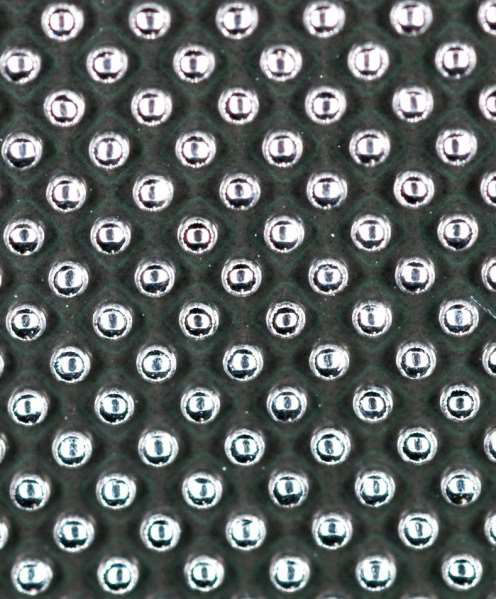
- Reduced availability of tin-lead Ball Grid Array (BGA) components
- Conversions (carefully performed) essential to ensuring availability and reliability of components for rugged application
The Problem
- Diminishing supply of tin-lead BGA components
- Reliability concerns with lead-free
- High thermal cycle environments
- Shock and vibration
- Tin whiskers?
- Reballing requires controlled processes to eliminate reliability risks
The Reballing Solution
- Component level modifications (including BGA reballing) are essential to the future of military and aerospace industry
- Reballing allows Commercial-off-the-Shelf (COTS) components to be used in high-reliability applications without the concerns associated with mixing of lead-free and tin-lead solders
- Reballing with high-lead solder spheres can provide even better reliability than standard tin-lead alloys
- High-lead spheres are more ductile and provide a higher standoff, which can significantly improve solder joint reliability
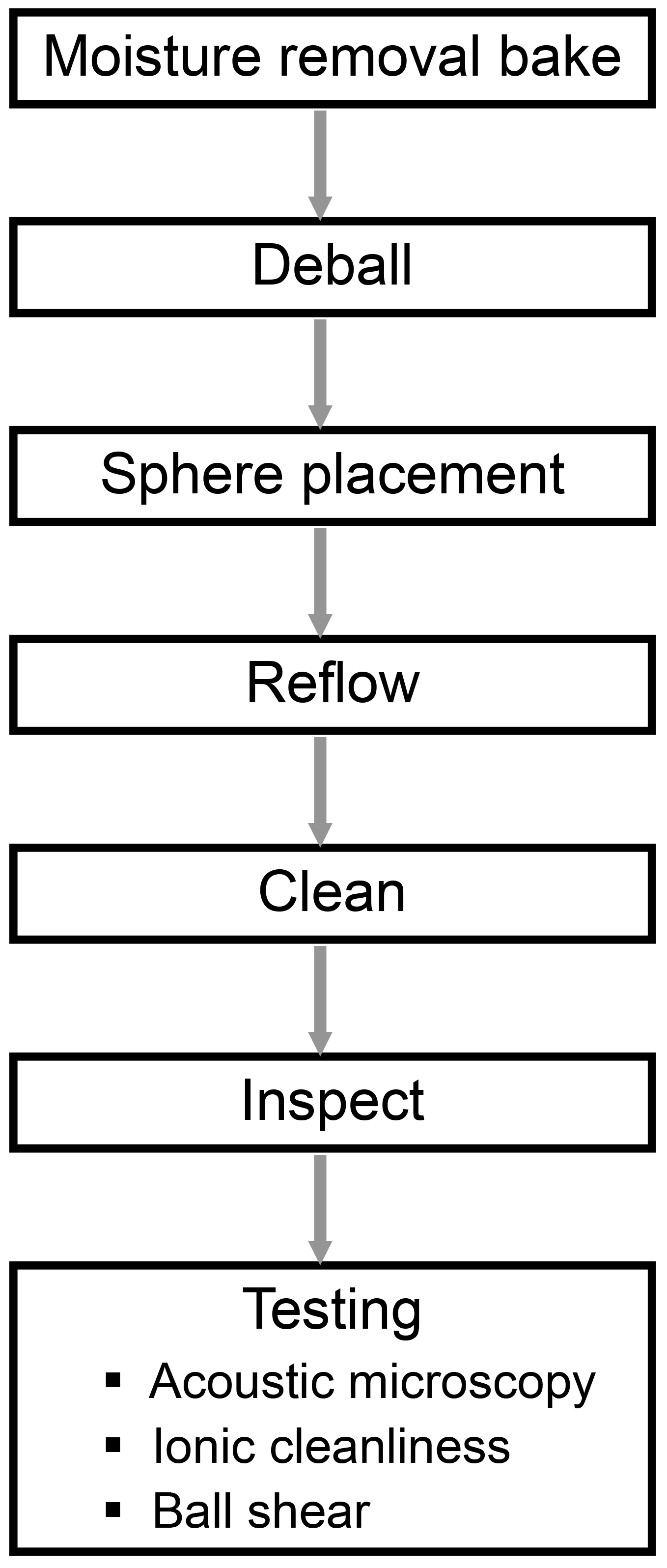
Reball Process Flow
Deball
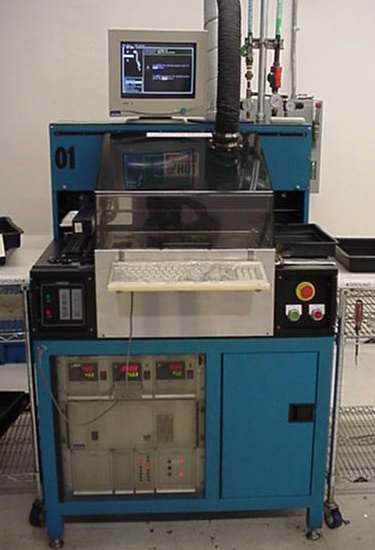
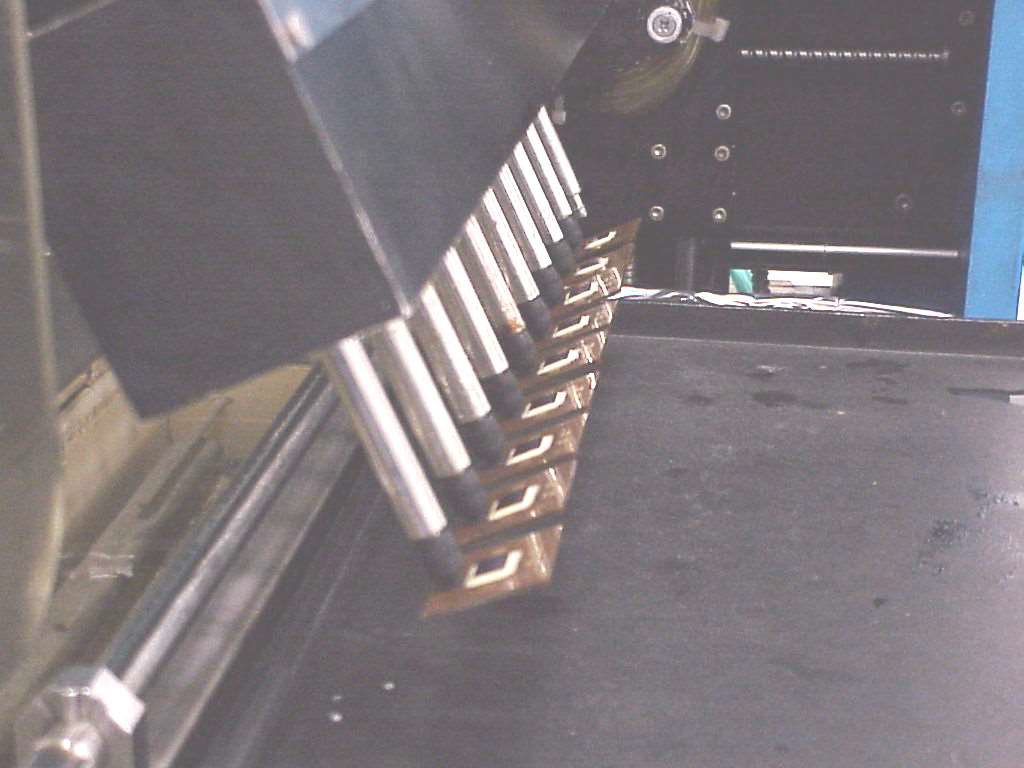
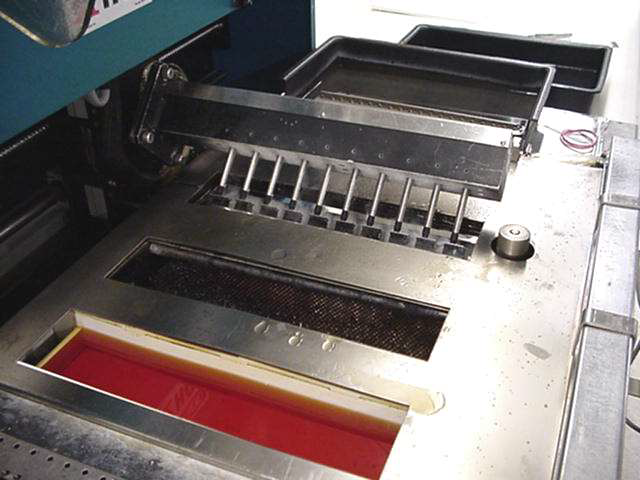
- Automated sphere removal in FlexLine ® robotic solder dip system
- Solder spheres and intermetallics are dissolved and flushed away by passing the component across a low temperature solder wave
- Forced-air preheat / cool down to minimize thermal shock
- Flux, preheat, solder, cool down, and rinse are fully programmable and repeatable
- Controlled, gentle, multi-unit process
Sphere Placement
Low-Volume Solution
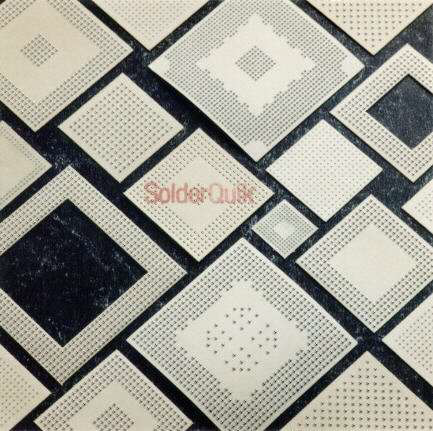
- Patented SolderQuik TM preform
- Total pattern flexibility
- Fast turn around (1-3 days)
- Moderate piece-part cost
High-Volume Solution
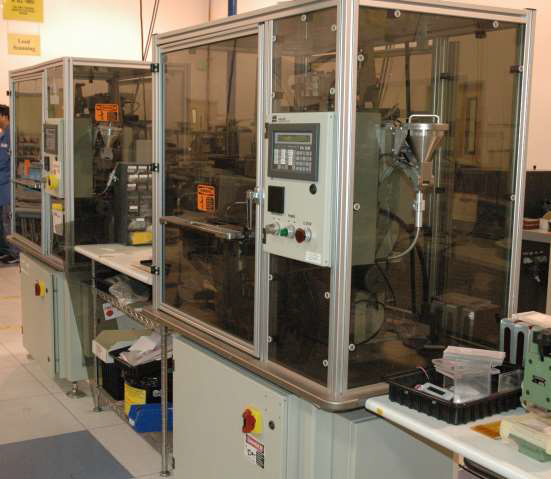
- Automated handling
- Custom tooling ($)
- Tooling lead time (3-6 weeks)
- Low piece-part cost
Reflow
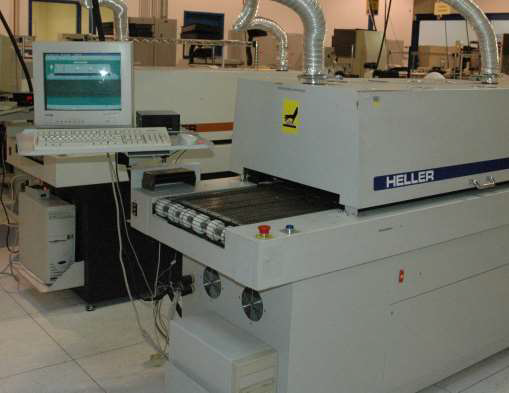
- Forced-convection reflow
- Controlled process
- Low component temperature maintained
- Component thermal gradient minimized
Process Monitors and Controls
- Temperature & humidity controlled environment
- Conductive flooring - ESD safe work areas
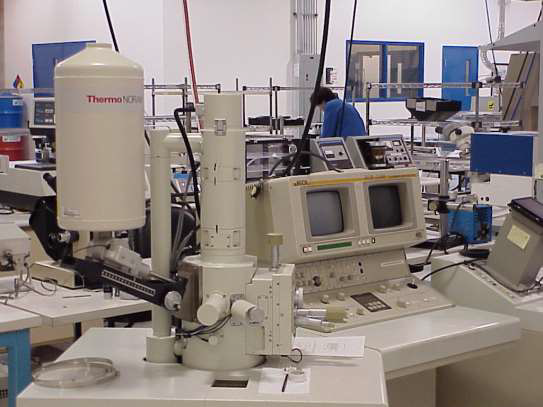
- Solder analysis at carefully timed intervals
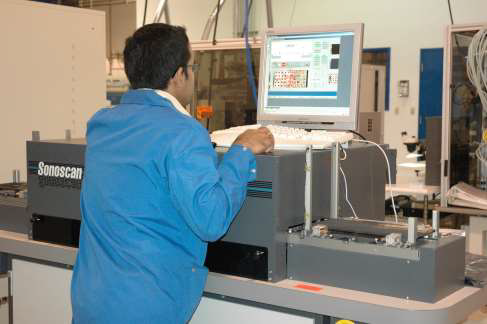
- 100% acoustic microscopy screening available
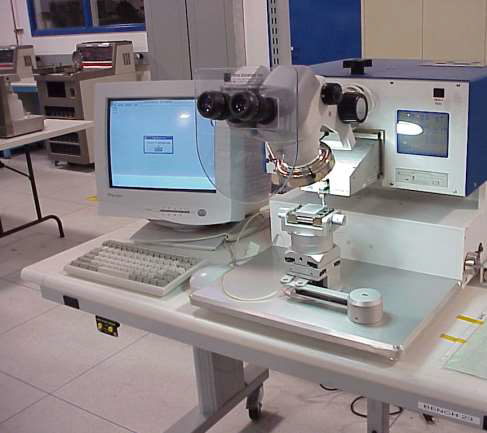
- Ball shear testing
- Fully equipped reliability and failure analysis lab
Conclusion
- Commercial components may not always be capable of meeting the environmental requirements of military and aerospace industry
- BGA reballing, with proper controls, resolves:
- Component availability
- Mixed solder issues
- Reliability risks with lead-free
Contact Us
SIX SIGMA
905 Montague Expressway Milpitas, CA 95035
Email: sales@solderquik.com
Phone: (408) 956 0100
Fax: (408) 956 0199
SolderQuik TM is a patented technology licensed exclusively to SIX SIGMA - Winslow Automation, Inc. FlexLine ® is a registered trademark of Winslow Automation, Inc.
Categories
Recent Posts
May 24, 2023
As part of the nation’s effort to sustain the microelectronics manufacturing capability necessary for national and economic security, and in support of Executive Order 14017, America’s Supply Chains, the Department of Defense recently entered a $10 million agreement with Six Sigma utilizing Defense Production Act (DPA) Title III authorities. Six Sigma will increase the capacity of both its copper solder column manufacturing and column attach processes to enable the production of high-reliability Column Grid Array components (such as Field Programmable Gate Arrays and Application Specific Integrated Circuits) for military and aerospace applications. The project will run 51-months and be performed at its facility in Milpitas, California. “This investment ensures critical DoD military and space programs operating in extreme thermal and vibration environments are available to meet the needs of American strategic interests,” said Dr. Taylor-Kale, ASD (IBP). “It exemplifies the Department’s commitment to ensuring the resilience and integrity of our nation’s critical supply chains.” About the Department of Defense’s Office of the Assistant Secretary of Defense for Industrial Base Policy Industrial Base Policy is the principal advisor to the Under Secretary of Defense for Acquisition and Sustainment (USD(A&S)) for developing Department of Defense policies for the maintenance of the United States defense industrial base (DIB), executing small business programs and policy, and conduction geo-economic analysis and assessments. The office also provides the USD(A&S) with recommendations on budget matters related to the DIB, anticipates and closes gaps in manufacturing capabilities for defense systems, and assesses impacts related to mergers, acquisition, and divestitures. IBP monitors and assesses the impact of foreign investments in the United States and executes authorities under sections 2501 and 2505 U.S.C. Title 10. See DoD Press Release